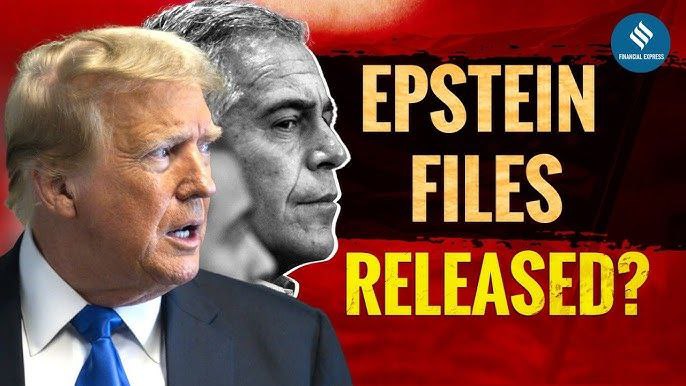
The long, contentious battle for transparency in the Jeffrey Epstein case reached a pivotal turning point in early 2026. Following the landmark Epstein Files Transparency Act (EFTA), the U.S. Department of Justice has been compelled to release its vast investigative holdings. When the Epstein file released in its largest batch on January 30, 2026, it contained over 3 million pages, 2,000 videos, and 180,000 images . This was not merely a document dump; it was the systematic unveiling of a hidden ledger connecting a convicted sex trafficker to a global web of billionaires, politicians, and foreign dignitaries. Yet, as lawmakers and victims quickly discovered, the full truth remained frustratingly obscured behind layers of questionable redactions.
The Legislative Hammer: The Epstein Files Transparency Act
The massive disclosure was not voluntary. It was forced by the Epstein Files Transparency Act, passed overwhelmingly by Congress and signed into law in November 2025 despite President Trump’s initial opposition . The law mandated that no records could be “withheld, delayed, or redacted on the basis of embarrassment, reputational harm, or political sensitivity, including to any government official, public figure, or foreign dignitary” . When the Justice Department missed the December 19 deadline, public and political pressure intensified. The resulting Epstein file released in January represented the government’s attempt—critics say a failed attempt—to comply with this sweeping mandate for transparency.



Powerful Names and Provocative New Details
The documents brought long-simmering associations into sharp, documented focus. The Epstein file released revealed that Elon Musk exchanged messages with Epstein to arrange visits to his island, with Epstein asking how many people to fly by helicopter and Musk inquiring about the “wildest party” . Howard Lutnick, now Trump’s Commerce Secretary, admitted to having lunch on Epstein’s island in 2012 with his family, contradicting his previous claims of cutting ties in 2005 . Sergey Brin, Google’s co-founder, was revealed to have dined at Epstein’s townhouse and visited his private island, corresponding directly with Ghislaine Maxwell . Additionally, a shocking draft indictment from 2007—never filed—detailed the extensive federal case that was shelved in favor of a lenient plea deal, describing victims as young as 14 and detailing a systematic operation .
The Redaction Scandal and the “Six Men” Revealed
Perhaps the most explosive development came when Representatives Ro Khanna and Thomas Massie viewed the unredacted files at a secure DOJ facility . Within two hours, they identified six wealthy, powerful men whose identities had been concealed by the Justice Department. The Epstein file released publicly had scrubbed these names, a fact Khanna called “a blatant violation of the Epstein Transparency Act” . Following congressional pressure, the DOJ acknowledged its “mistake” and revealed the six men: Leslie Wexner (billionaire and former Victoria’s Secret CEO, labeled an FBI co-conspirator), Sultan Ahmed Bin Sulayem (CEO of Dubai Ports World, who sent Epstein a torture video), and four others—Salvatore Nuara, Zurab Mikeladze, Leonic Leonov, and Nicola Caputo . Lawmakers accused the “Trump FBI” of scrubbing these files months earlier, demanding to know who else remains hidden.
Victims Speak Out and the Unfinished Fight for Justice
Amid the political firestorm, the voices of survivors have remained a powerful, anguished constant. In a striking 40-second video aired on Super Bowl Sunday, Epstein victims appeared with black redaction marks over their mouths, holding photographs of their younger selves and declaring, “we all deserve the truth” . They noted that while the Epstein file released totals millions of pages, 3 million files still have not been released . Lisa Phillips, a survivor, accused the DOJ of violating victims’ requirements by exposing their identities while shielding powerful men . Representative Jamie Raskin, after viewing the files, reported seeing references to victims as young as 9 years old, calling the situation “preposterous and scandalous” .
The Cover-Up Within the Disclosure
The most damning allegation emerging from this saga is that the Epstein file released to the public was never truly raw. Khanna asserted that the FBI had “scrubbed” the files back in March 2025, before the Transparency Act was even passed . The DOJ simply uploaded what the FBI sent. While 70-80% of the files remain redacted, the glimpse afforded to lawmakers in just two hours revealed six hidden associates. Deputy Attorney General Todd Blanche insists the process is complete and there will be no further prosecutions . Yet survivors, congressional investigators, and a public that has lost faith in institutional accountability refuse to accept this as the final chapter. The Epstein file released has answered some questions, but it has raised an even more urgent one: if six names were found in two hours, what—and who—remains hidden in the millions of pages the government refuses to show?